
What Does Professional Teeth Whitening Do to Your Teeth?
Professional teeth whitening lightens the natural color of your teeth with a peroxide-based gel. The gel lifts stain from the enamel and from the dentin beneath it. The treatment is cosmetic, so it changes color and leaves the way your teeth work untouched. Dentists use hydrogen peroxide or carbamide peroxide, which some sources call urea peroxide. Carbamide peroxide breaks down into hydrogen peroxide as it works. Both gels rely on the same chemistry, so your dentist picks the one that suits the method. Whitening belongs to cosmetic dentistry, the branch of care that focuses on how teeth look. It does not treat decay or gum disease, so it never replaces an exam or a cleaning. Many patients hope for a brighter smile in photos and at work. Whitening delivers whiter teeth, not a new set of teeth.
Key Takeaway: Professional whitening lightens the color of your natural teeth and changes nothing about how they function.
What Causes Teeth to Stain or Yellow?
Teeth stain or yellow because food, drink, tobacco, age and some medications change the color of enamel and dentin. Surface staining builds up first, while deeper stains form more slowly and lift less easily. Knowing the cause of the discoloration helps your dentist choose the right approach. Three groups of causes cover most cases, and each one responds differently to whitening.
Everyday Surface Stains From Coffee, Tea, Wine and Tobacco
Coffee, tea, red wine and tobacco leave pigment on the outer layer of enamel. Enamel has tiny pores, so dark drinks slip into them a little more with every cup. Regular cleanings remove some of this buildup, and whitening lifts the rest.
These habits most often cause everyday surface stains:
- Coffee and black tea, which deposit brown pigment on the front teeth
- Red wine, which leaves a purple tint that lingers in the enamel
- Smoking and chewing tobacco, which add yellow and brown stains
- Dark sauces and colas, which add color a little at a time
Your favorite mug did not mean any harm, but the enamel keeps the evidence.
How Aging and Enamel Wear Change Tooth Color
Aging changes tooth color because the outer layer of enamel wears thinner over the years. Thinner enamel lets the naturally yellower dentin show through. Brushing, acidic foods and grinding all speed that wear. Whitening can lighten dentin somewhat, but it cannot rebuild worn enamel. Worn enamel can also make teeth more sensitive. Your dentist checks for that during the exam before any gel goes on.
Deeper Stains From Medications, Fluoride and Injury
Some stains form inside the tooth, so they respond to whitening less predictably. Tetracycline antibiotics taken while teeth develop can leave gray or brown bands. Too much fluoride during development causes fluorosis, which shows as white or brown spots. An injury can darken a single tooth to gray. Teeth stained by tetracycline may need several months of nightly tray wear. Your dentist will tell you honestly whether whitening is worth trying.
In-Office Whitening or Custom Take-Home Trays: Which Fits You?
In-office whitening fits you if you want fast change in one visit. Custom take-home trays fit you if you prefer a gradual pace. Both options use peroxide gels, and both begin with an exam. They differ in speed, supervision and schedule. Your dentist helps you weigh those three factors against your calendar and your comfort level.
The table below compares the two approaches side by side.
| Feature | Same-Day In-Office Whitening | Custom Take-Home Trays |
|---|---|---|
| Where whitening happens | In the dental chair, applied by the dental team | At home, with trays you wear yourself |
| Visits | One whitening visit after your exam | A fitting visit, then daily wear at home |
| Pace | Fast change in a single session | Gradual change over days to weeks |
| Supervision | The team watches the entire session | You follow written instructions from your dentist |
| Best for | Tight schedules and upcoming events | Steady control and easy touch-ups |
Same-Day In-Office Whitening
Same-day in-office whitening applies a concentrated gel to your teeth during one visit. The team places a barrier over your gums first, then applies the gel and times it carefully. A stronger gel does not always mean a better result. Research suggests that lower peroxide concentrations can cause less sensitivity in the office while still changing color well. The benefit of the office visit is supervision, gum protection and a dentist who checks your teeth first.
Custom Take-Home Trays
Custom take-home trays start with impressions of your teeth, which a dentist or supervised team member takes. Thin plastic trays are then made to fit your mouth, and you wear them with a dentist-supplied gel. Dentist-dispensed tray systems typically use carbamide peroxide gels, and your dentist sets the strength and the schedule. A custom fit keeps the gel on the teeth and off the gums. At-home whitening over days to weeks builds the shade gradually and evenly. You stop when you reach your desired level.
Using Both for Longer-Lasting Brightness
Using both methods together can extend how long your brighter shade lasts. A randomized trial of 105 people appeared in the Journal of Dentistry. Home, in-office and combined whitening all improved color. The combination outperformed either method alone at six months.[1] Patients looking for lasting results often start with a same-day visit. They then keep trays for later touch-ups. Your dentist can suggest that plan when your schedule and your goals point that way.
What Happens at Your Whitening Visit, Step by Step
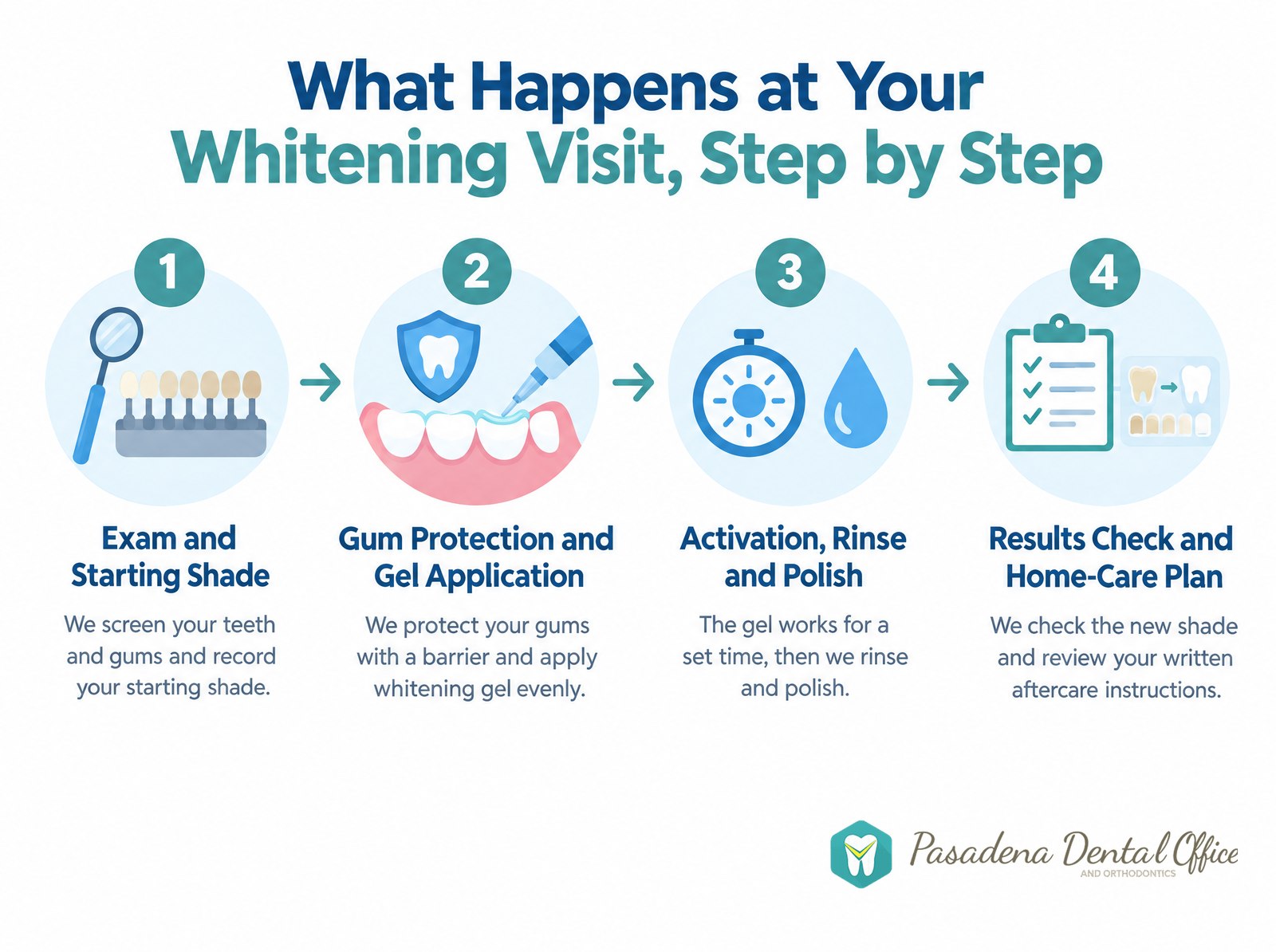
Your whitening visit unfolds step by step, and a teeth whitening treatment always begins with an exam. It moves through gum protection and gel application, then ends with a results check and a home-care plan. Each step has a purpose, and the dental team explains it as you go. You always know what comes next. You can ask for a pause at any point.
Exam and Starting Shade
The visit starts with an exam that screens your teeth and gums for decay, gum disease and worn enamel. Our dentist evaluates your teeth, reviews your health history and asks about past sensitivity. You may be asked about medications too. No special preparation is required beforehand. The team then records your starting shade, so you can see the change afterward. Treating any cavity first keeps the gel from irritating an exposed area.
Gum Protection and Gel Application
The team protects your gums with a barrier before any gel touches your teeth. The barrier keeps the peroxide away from soft tissue and lowers the chance of irritation. The team then applies the whitening gel evenly across the fronts of your teeth. Precise placement matters more than speed at this step.
Activation, Rinse and Polish
The gel then works on your teeth for a set time that the dentist chooses for you. Any whitening system that includes a light activates the gel with it. Your dentist tells you whether your plan uses one. The team then removes the gel and rinses your teeth. A final polish leaves the surface smooth and clean.
Results Check and Home-Care Plan
The dentist re-checks your shade against the starting shade and reviews the result with you. The team updates your plan if you want a deeper shade. You receive written aftercare instructions that cover food, drink and cleaning. Patients on the take-home path also leave with their trays and gel. The team schedules a follow-up if you want touch-ups later.
Professional Whitening vs. Store-Bought Kits
Professional whitening differs from store-bought kits in fit, supervision and speed. Store-bought strips and trays do whiten teeth, but they take longer and rarely fit your mouth well. Professional care adds an exam, gum protection and a plan matched to your teeth. A dentist also catches problems, such as cavities, before a gel makes them sore.
Speed shows the difference clearly. As reported by the American Dental Association, one over-the-counter technique took 16 days. A 7-day tray system or a single-day in-office treatment reached the same whitening level sooner.[2] Professional care reaches the same shade in fewer days.
The table below sets the two approaches next to each other.
| Feature | Professional Whitening | Store-Bought Kits |
|---|---|---|
| Fit | Trays molded to your teeth, or gel applied by the team | One shape for every mouth |
| Supervision | A dentist examines you and monitors the process | You follow the box instructions alone |
| Gum protection | A barrier or custom fit shields the gums | Strips and generic trays can touch the gums |
| Screening | Decay and gum disease get treated first | No exam before you start |
| Speed | Faster change for the same shade | Slower change over more days |
Policy also matters here. As per American Dental Association policy, applying a chemical only to whiten teeth counts as dentistry. Lawful self-application is the exception. That is a licensing point rather than legal advice. It explains why kiosk or salon whitening deserves a second look. Custom tray impressions likewise belong with a licensed dentist or a supervised team member. Professional gel is not simply stronger, so the real advantage is supervision, a custom fit and an exam.
Are You a Good Candidate for Teeth Whitening?
You are a good candidate for teeth whitening if your teeth and gums are healthy. Yellow or brown stains respond best. A dentist confirms candidacy after an exam. Untreated decay and gum disease come first before whitening teeth, because the gel can irritate both. The list and the sections below show who whitens well and who needs another approach.
Good candidates for professional whitening usually share these traits:
- Healthy teeth and gums, with no untreated cavities
- Yellow or brown stains from food, drink or tobacco
- Natural teeth without large restorations in the smile zone
- Realistic expectations about a lighter shade rather than a perfect white
- A willingness to follow the aftercare plan
Stains That Respond Well to Whitening
Yellow and brown surface stains from coffee, tea, wine and tobacco respond best to whitening. These stains sit in the outer enamel, where the gel reaches them directly. Age-related yellowing often improves as well, because the gel lightens the dentin beneath thinning enamel. Patients with this pattern usually notice a clear change in shade after treatment.
Stains and Situations That May Need Another Approach
Gray tones from injury or medication, very sensitive teeth, untreated decay and gum disease may need another approach. Decay and gum disease need treatment first. Veneers or bonding can cover stains that whitening cannot reach. Those options change the tooth's surface rather than its color, and the dentist explains the tradeoffs. If you are pregnant or nursing, ask your dentist before starting and check with your doctor as well. Braces and retainers also call for a dentist's advice first. Whitening for children and teens is a separate conversation, so ask the dentist first.
The table below summarizes how common situations respond.
| Situation | How whitening responds | Another option to discuss |
|---|---|---|
| Yellow surface stains | Usually responds well | Regular cleanings to maintain the shade |
| Brown stains from coffee or tobacco | Often responds well | A cleaning before whitening |
| Gray tone from injury | Responds less predictably | Bonding or a veneer |
| Tetracycline stains | May take months of nightly wear | Veneers |
| Very sensitive teeth | Needs a milder plan first | Treating sensitivity, then whitening |
Crowns, Veneers and Fillings Do Not Whiten
Crowns, veneers and fillings do not whiten, because the gel changes natural tooth color only. The American Dental Association notes that whitening will not work on caps, veneers, crowns or fillings. Bleaching may also roughen enamel slightly and weaken the bond between enamel and a restoration. A tooth-colored filling therefore keeps its original shade while the teeth around it lighten. Your dentist maps every restoration in your smile before whitening begins.
Is Teeth Whitening Safe, and Why Do Some Teeth Feel Sensitive?
Teeth whitening is safe for most healthy adults when a dentist supervises it after an exam. It is a widely used cosmetic procedure. The two common effects are tooth sensitivity and gum irritation. Both are usually temporary. Screening, gum protection and a plan matched to your teeth lower the odds of either one. No dentist can promise a whitening treatment without any side effects, so honest expectations matter.
How Common Sensitivity Is and How Long It Lasts
Sensitivity is common, and it usually fades within days. Doctors call the underlying condition dentin hypersensitivity, and it can feel like a brief sting or pain. As stated by the American Dental Association, sensitivity affects up to two thirds of users early in bleaching. It typically emerges within two to three days with trays and usually resolves by the fourth day.[3] The risk rises with higher peroxide concentration, existing adhesive restorations and longer or stronger light exposure. Tell your dentist about past sensitivity, because that history shapes the plan.
What Evidence Says (and Does Not Say) About Whitening
The evidence says whitening works, and it also shows that research on whitening has limits. Trials compare different gels, strengths and schedules, so no single method wins every test. The randomized trial cited earlier followed patients for six months, which leaves long-term outcomes less certain. Sensitivity and gum irritation appear most often in the research. That honest picture explains why the practice screens each patient. The team personalizes the plan instead of promising a shade.
Keeping Whitening Comfortable
Your dentist has practical ways to keep whitening comfortable. Gum barriers, a custom-fitted tray and shorter wear times all reduce irritation. Desensitizing gels or fluoride treatments can calm teeth that ache after a session.
These steps often ease sensitivity during and after whitening:
- Pausing whitening for a day if teeth feel tender
- Brushing with a toothpaste made for sensitive teeth
- Asking your dentist about a fluoride or desensitizing product
- Choosing lukewarm drinks for the first days
If sensitivity lingers, tell the office so the team can adjust your plan.
How Long Do Whitening Results Last?
Whitening results last as long as your habits allow, and one trial showed lasting change at six months. That trial found that home, in-office and combined whitening all kept a clear color improvement at the six-month mark. Beyond six months, results vary from person to person, depending on your habits. Your dentist will advise you based on your teeth and your routine, not on a promised number of years. No fixed number of years applies to everyone.
Habits decide most of what happens next. Drinking coffee, tea or red wine darkens teeth again over time, and regular cleanings slow that drift. Smoking does the same. Touch-ups are a normal part of keeping the shade. Plan for them rather than treating them as a failure. Many patients keep their trays and refresh the shade before a big event.
Keeping Your Results Bright After Whitening
Your results stay bright longer when you protect the shade with a few daily habits. The practice gives aftercare guidance at your visit, and this section explains the reasoning behind it. Small choices in the first days matter most, because freshly whitened teeth pick up color easily. After that, ordinary habits keep the shade steady.
What to Eat and Drink Right After Whitening
Many dental offices suggest a white diet of light-colored foods for the first day or two. Chicken, rice, pasta, bananas and plain yogurt fit that pattern. Sipping dark drinks through a straw keeps coffee, tea and red wine away from the front teeth. A water rinse after any colored food or drink helps as well. Your dentist gives you the exact window that applies to your plan.
Daily Habits That Slow New Stains
Daily habits slow new stains by removing plaque and limiting pigment. The list below covers the routine that keeps the shade steady.
Habits that protect a whitened smile include:
- Brushing twice a day and flossing daily to remove plaque
- Scheduling regular cleanings to lift fresh surface stains
- Swapping one daily coffee or tea for water
- Avoiding all forms of tobacco
- Skipping colored mouthwash for the first days
Touch-Ups and Maintenance
Touch-ups refresh a shade that has drifted, and most patients need them at some point. Keeping your custom trays makes a touch-up simple, because you already own the fit. Your dentist recommends a schedule that matches your habits and your sensitivity. No standard interval fits everyone, so the team sets yours at your follow-up.
Planning Whitening Around Veneers, Crowns and Bonding
Planning whitening around veneers, crowns and bonding means whitening your natural teeth first. Restorations keep their color, so they need to match the new shade afterward. That order lets the dentist choose the right shade for a new veneer or crown. Waiting a short time before getting a new restoration also lets the shade settle. Reversing the order risks a bright natural tooth beside a restoration that now looks dull.
If you have old restorations that no longer match, tell the dentist before you begin. The dentist can plan replacements after the whitening settles, which usually takes a short wait so the shade stabilizes. Veneers, crowns and bonding all fit into this same sequence. Whitening first also shows how light your natural teeth can go. That information helps you decide whether a cosmetic upgrade is worth it, and it keeps the plan simple.
What Shapes the Cost of Teeth Whitening?
Several factors shape the cost of teeth whitening, and your exam sets most of them. The method you choose matters, and so does how deep your stains run. Any work needed before whitening, such as a cleaning or a filling, changes the plan. The office explains these factors at a consultation so you can decide with clear information.
The table below shows how each factor affects your plan.
| Factor | How it shapes your plan |
|---|---|
| Method | In-office visits and take-home trays follow different schedules and supplies |
| Stain depth | Deeper stains may need more time or a combined approach |
| Preparation | A cleaning or a filling may come before whitening |
| Trays and gel | Custom trays and refill gel add supplies to the take-home path |
Bring these requests to your consultation:
- Ask which method fits your schedule and your teeth
- Ask whether a cleaning or a filling should come first
- Ask how the team manages sensitivity
- Ask how touch-ups work after the first round
- Ask which payment options apply to your plan
Insurance plans usually treat whitening as a cosmetic service, so ask the office to check your specific plan. The office accepts many PPO plans for other care, including Delta Dental, MetLife, Cigna and Aetna. Coverage for whitening depends on your plan. A consultation lets the team talk through the method, your starting condition and your payment options.
How to Pay for Whitening
Patients pay for whitening with credit cards, debit cards, mobile payments or third-party financing. The office works with financing partners including CareCredit, Cherry, LendingClub and Sunbit. Each lender sets its own terms, and approval comes from the lender rather than the office. Ask the team which option fits your treatment and your budget.
The Dentists and Hygienists Behind Your Whitening
The dentists and hygienists behind your whitening care for patients in one full-service office at 181 N Hill Avenue. You can meet Dr. Solomon Heifets, DDS, a graduate of Moldova University School of Dental Medicine. He describes dentistry as a profession that blends precision, artistry and compassion. He holds memberships in the American Dental Association and the California Dental Association. Bianca, the hygienist, holds a bachelor's degree in biology and a laser dentistry certification. She speaks English and Spanish and focuses on patient education, so questions about your teeth get plain answers.
The office pairs that team with a set of practical features, listed here for planning your visit:
The team explains each step. The office aims to earn your trust through that explanation and a gentle touch. One patient shared this Google review of the office:
"The team is amazing they always explain treatment throughly I've been coming here for over 10years and I .highly recommend this office the staff is amazing and always leave with the best smile! Thanks to Dr.Solomon, Carmen, Monica and Susan !"
Common Questions About Whitening, Answered
How much does professional teeth whitening cost in Pasadena?
The cost depends on the method you choose and the condition of your teeth. A dentist needs to examine you before the office can advise on your plan. Financing partners including CareCredit, Cherry, LendingClub and Sunbit can spread the cost over time. Call Pasadena Dental Office and Orthodontics at (626) 219-7180 to schedule a consultation.
Is professional teeth whitening safe for my enamel?
Supervised whitening is widely used, and dentists screen for problems first. The exam checks for decay, gum disease and worn enamel before any gel goes on. Sensitivity and gum irritation are the most common effects, and both usually fade. Research on whitening has limits, so the team personalizes your plan rather than promising a shade.
Will whitening make my teeth sensitive?
Whitening can make teeth sensitive, especially in the first days. The sensitivity is usually temporary and often fades by the fourth day. Your dentist can pause the plan, adjust the schedule or recommend a desensitizing product. Tell the team about past sensitivity before you start.
How long do professional whitening results last?
Results depend on your habits, and the best available trial showed lasting improvement at six months. Coffee, tea, red wine and tobacco darken teeth again over time. Regular cleanings and touch-ups slow that drift. Your dentist advises you on a schedule after your visit.
Will whitening work on crowns, veneers or fillings?
Whitening does not change the color of crowns, veneers or fillings. Only natural tooth structure lightens. The dentist whitens your natural teeth first, then matches or replaces visible restorations to the new shade. Having a list of your restorations ready helps at the exam.
Which is better for me, in-office whitening or take-home trays?
The better choice depends on your schedule, your sensitivity and your goals. In-office whitening delivers quick change in one visit, while trays offer a gradual pace at home. Over-the-counter products took much longer to reach the same level in one comparison. Many patients combine both, and your dentist can help you choose.
Can I whiten teeth that are gray, or stained from medication?
Gray and medication-related stains respond less predictably than yellow or brown ones. Tetracycline stains may take months of nightly treatment. Veneers or bonding can cover stains that whitening cannot lift. The dentist tells you honestly what to expect after an exam.
How soon can I have coffee or red wine after whitening?
Your dentist gives you a specific window at your visit. Until then, choose light-colored foods and sip dark drinks through a straw. Rinsing with water afterward helps protect the new shade. Ask the team at Pasadena Dental Office and Orthodontics if you have questions about your plan.
Can I whiten my teeth if I have braces or retainers?
Ask your dentist first, because braces and retainers can leave uneven results. Gel may not reach the teeth under brackets. The dentist may suggest finishing orthodontic care before whitening. Book an exam at our office so the team can review your situation.
Where can I get professional teeth whitening near me in Pasadena?
Pasadena Dental Office and Orthodontics offers professional teeth whitening at 181 N Hill Avenue, Pasadena, CA 91106. The office is open Monday through Friday, 9AM to 6PM. Call (626) 219-7180 or book online. The office serves patients from Pasadena, Altadena, South Pasadena and nearby communities.
Teeth Whitening for Patients in Pasadena, Altadena and South Pasadena
Teeth whitening for patients in Pasadena, Altadena and South Pasadena is available at Pasadena Dental Office and Orthodontics. The office sits at 181 N Hill Avenue in Pasadena, CA 91106. It welcomes patients from Altadena, South Pasadena and nearby communities. Hours run Monday through Friday, 9AM to 6PM. A free parking lot and free street parking serve every visit. The entrance, parking lot and restroom are wheelchair accessible. The team speaks English and Spanish. Call our office at (626) 219-7180 to reach the team directly.
Pasadena Dental Office and Orthodontics starts every whitening plan with a short exam. That exam shows which option suits your teeth. The team explains each step, the sensitivity to expect and the aftercare that keeps your shade steady. You can choose in-office whitening, custom trays or a combination of both, whichever fits your schedule. Ask any question along the way, from sensitivity to touch-ups. Call (626) 219-7180 or book your appointment online to schedule your exam at 181 N Hill Avenue in Pasadena.