
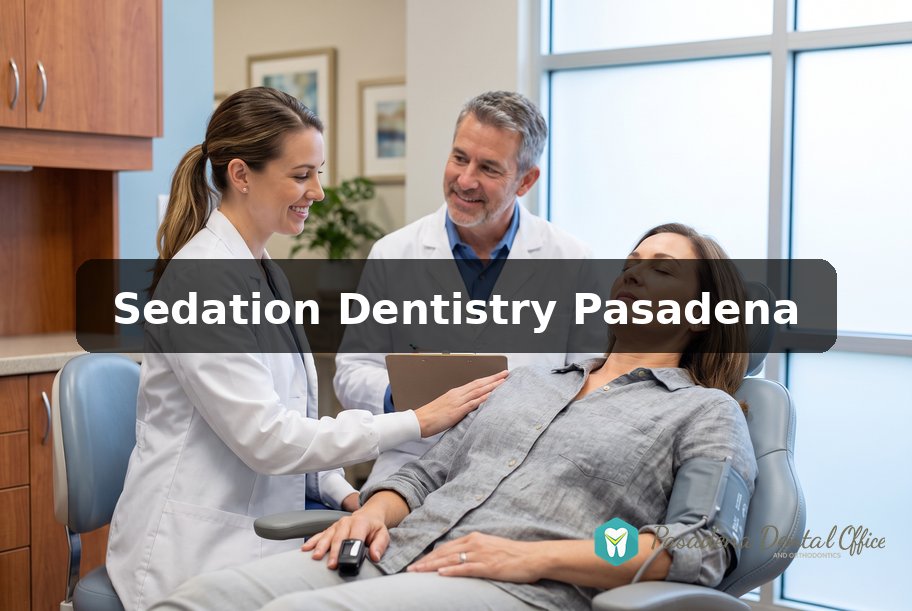
How Sedation Dentistry Helps Anxious Patients
Sedation dentistry helps anxious patients by easing fear before a single instrument touches their mouth. It combines plain conversation, a slower pace, and real pharmacological comfort measures. Routine dental care starts to feel manageable instead of overwhelming. Patients who once avoided checkups for years can sit through a cleaning or filling without panic. Dental care becomes possible again, not just bearable.
A few terms come up throughout this page. Knowing them in plain language makes every section below easier to follow.
| Term | What It Means |
|---|---|
| Sedation dentistry | Using a calming measure, pharmacological or otherwise, to help an anxious patient tolerate dental treatment. |
| Conscious sedation | A state in which the patient stays awake and able to respond, but feels deeply relaxed. |
| Local anesthesia | Numbing medication applied to one specific area of the mouth before a procedure. |
| IV moderate sedation | Sedative medication delivered through an intravenous line to produce deep relaxation during longer procedures. |
Every option this practice actually offers is a real, confirmed modality. None of it is a generic sedation menu copied from elsewhere.
Understanding Dental Anxiety in Pasadena
Understanding dental anxiety in Pasadena starts with recognizing how common and physical this fear really is. As reported by the National Institute of Dental and Craniofacial Research, nearly 20 percent of US adults experience moderate to high dental fear.[1] About 7 percent experience high fear specifically. That smaller group is exactly who sedation dentistry is built to help. The fear shows up in real physical symptoms, not just hesitation.
Dental anxiety often shows up in the body before a patient even reaches the parking lot, including these common signs:
- A racing heartbeat at the thought of an appointment
- Clammy palms in the waiting room
- Avoiding or canceling checkups for months or years at a time
- A tight jaw or shallow breathing during treatment
- A strong urge to leave in the middle of an appointment
Pasadena Dental Office and Orthodontics treats each of these signs as a reason to slow down, not a reason to rush the visit.
Your Sedation & Comfort Options at Our Pasadena Office
Our sedation and comfort options at this Pasadena office cover two confirmed, real modalities. Local anesthesia numbs the specific area being treated, keeping the patient fully alert and comfortable throughout a routine procedure. IV moderate sedation, sometimes called IV sedation for short, uses medication delivered through an intravenous line to produce deep relaxation for longer or more involved treatment. Dr. Heifets and his team match the option to the procedure and the patient's own level of dental anxiety.
Local Anesthesia (Standard Numbing)
Local anesthesia numbs the exact area being treated before any drilling, filling, or extraction begins. The patient stays fully awake, aware, and able to answer questions throughout the visit. It works well for routine fillings, cleanings, and most restorative work. It also carries the lightest level of sedation of the two confirmed options here.
IV Moderate Sedation
IV moderate sedation delivers sedative medication directly through an intravenous line placed before treatment starts. Patients reach a deeply relaxed state and often remember little of the procedure itself afterward. Dr. Heifets' team administers and monitors it throughout longer or more involved appointments. These are exactly the appointments a highly anxious patient might otherwise find impossible to sit through.
Choosing between the two confirmed options often comes down to two practical questions. How long will the procedure take, and how does the patient need to feel afterward?
| Option | Recovery Afterward | Who Commonly Chooses It |
|---|---|---|
| Local Anesthesia (Standard Numbing) | Normal activity resumes right after the appointment | Patients with mild dental anxiety or a routine procedure |
| IV Moderate Sedation | Needs a driver and rest for the remainder of the day | Patients with higher dental anxiety or a longer procedure |
Who Sedation Dentistry Is Right For
Sedation dentistry is right for patients whose fear, gag reflex, or treatment length makes routine care difficult. Good candidates typically have high dental fear, a strong gag reflex, or special needs. A procedure long enough that sitting still becomes genuinely hard also qualifies. The right option depends on how much relaxation each patient actually needs, not a single standard answer.
A patient is often a good candidate for one of these two confirmed sedation options when they recognize any of the following:
- High dental fear or anxiety that has caused delayed care
- A strong gag reflex that makes routine procedures difficult
- A longer or more involved procedure planned in one visit
- Special needs that make sitting through standard treatment harder
- A history of difficult past dental experiences
Sedation dentistry is not automatically appropriate for every patient. The practice reviews each patient's full medical history before recommending either option. Pregnancy, certain allergies, and some existing medical conditions can change which option is safe. Dr. Heifets discusses medical history directly with every patient before treatment begins. A general dentist trained and experienced in sedation protocols, like Dr. Heifets, provides both confirmed options directly in-office, with no separate anesthesiologist referral required.
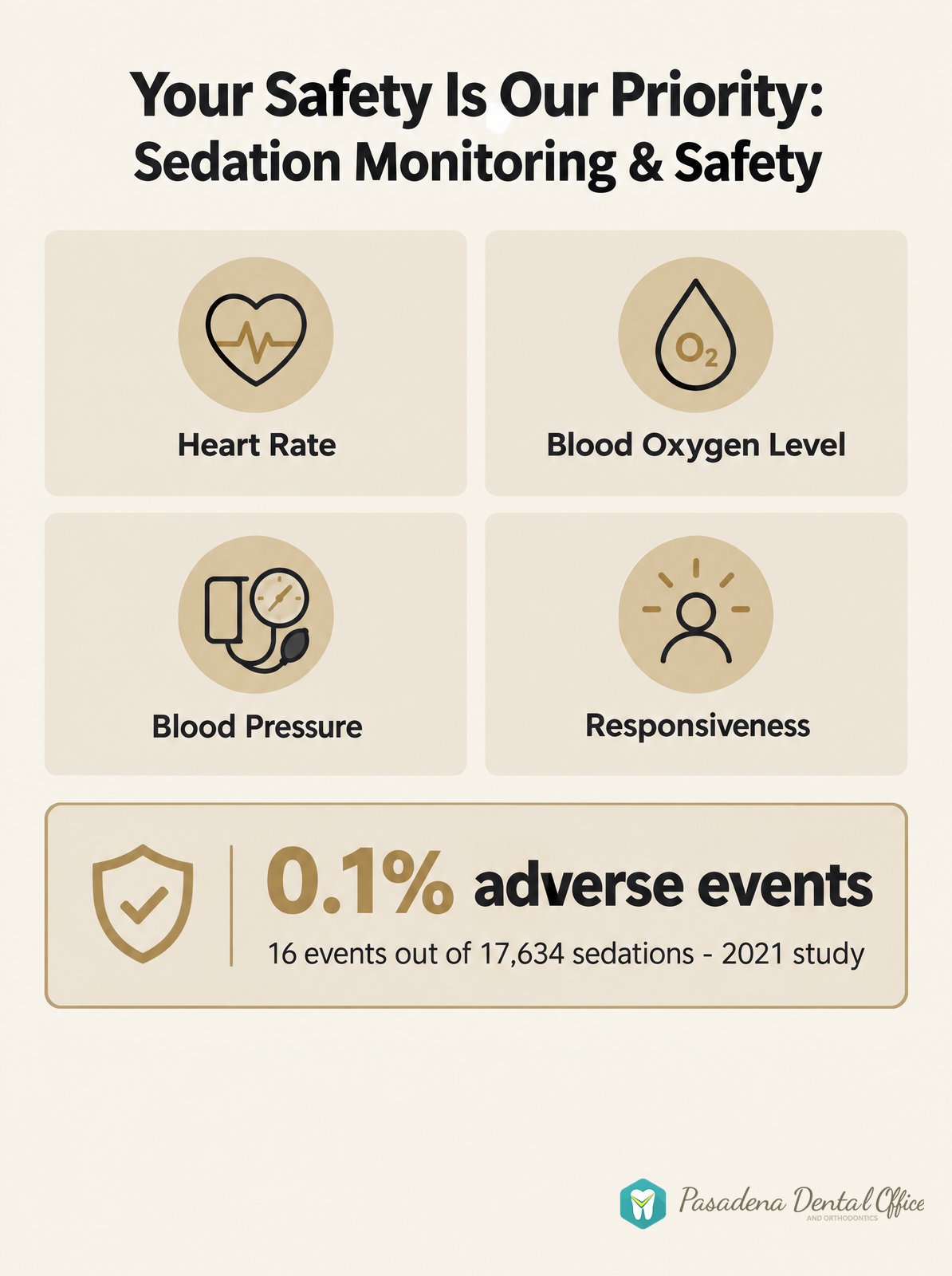
Your Safety Is Our Priority: Sedation Monitoring & Safety
Your safety is our priority throughout every sedation appointment at this Pasadena office. Every patient receiving IV moderate sedation is monitored continuously from the first dose until they're fully alert again. Vital signs, oxygen levels, and responsiveness are tracked the entire time. IV moderate sedation carries a strong real-world safety record when administered and monitored this closely.
According to a 2021 study of 17,634 sedations, just 16 adverse events occurred, 0.1 percent of cases, with no deaths.[2]
The team tracks several specific measures throughout every sedation appointment, not just a general sense that the patient looks comfortable:
| What's Monitored | Why It Matters |
|---|---|
| Heart rate | Confirms the sedative is keeping the body calm, not overly suppressed |
| Blood oxygen level | Flags any breathing change immediately, before it becomes a problem |
| Blood pressure | Tracks how the body is responding to the sedative in real time |
| Responsiveness | Confirms the patient can still react appropriately throughout the appointment |
This same monitoring standard applies every time IV moderate sedation is used in this office, not only on a patient's first visit.
What to Expect: Choose Your Comfort Level
What to expect starts with a conversation about which comfort level actually fits each patient. Dr. Heifets and his team walk through the visit before any treatment begins and explain what each sedation option feels like. The patient sets the pace from that first conversation onward. No surprises, and no rushed explanations delivered through a mask.
A typical visit for an anxious patient follows a few simple steps:
Listen first. The team hears out the patient's specific fears and past dental experiences before planning anything.
Explain the confirmed options. Local anesthesia and IV moderate sedation are explained side by side, in plain language.
Choose the comfort level. The patient and Dr. Heifets agree on the option that fits the procedure and the fear involved.
Go at the patient's pace. Breaks and extra explanation stay available throughout the appointment.
Head home informed. Patients leave with clear aftercare instructions and a direct way to ask follow-up questions.
IV moderate sedation's effects last for several hours, so patients should plan for a ride home after their appointment.
Your Comfort Team at Pasadena Dental Office and Orthodontics
Your comfort team is led by Dr. Solomon Heifets, DDS, the practice's primary dentist. Dr. Heifets trained at Moldova University School of Dental Medicine and treats dentistry as a blend of precision, artistry, and compassion. He built his approach around making sure every patient feels informed and genuinely cared for. No one gets rushed through an appointment here. Read more about Dr. Heifets' background and approach to care.
Hygienist Bianca, fluent in English and Spanish, supports sedation appointments alongside Dr. Heifets from start to finish, helping patients who feel more comfortable communicating in either language.
Why Sedation Dentistry Works Here
Sedation dentistry works here because it combines real modality-level benefits with practice-level advantages under one roof. Patients get genuine relief from fear itself, not just from one procedure. They also get that relief from a practice equipped to handle whatever the procedure actually requires.
The Benefits of Sedation Dentistry
Sedation dentistry offers patients several concrete benefits beyond simply getting through one appointment:
- Helps patients complete treatment they had been avoiding for months or years
- Restores confidence that dental visits don't have to mean dread
- Provides real relief for patients with a strong gag reflex or high fear
- Extends what can be completed safely in a single visit
- Encourages patients to return for routine care instead of waiting for an emergency
As noted by a study of 34,191 sedation patients, 94.3 percent reported satisfaction afterward, even though 80.3 percent felt anxious beforehand.[3] The same research found no long-term reduction in general dental fear from sedation alone. Comfort during treatment and lasting anxiety relief are two separate goals.
What Sets Our Pasadena Office Apart
Several practice-level details set this Pasadena office apart, supporting patient comfort just as much as clinical precision. Beyond sedation itself, the practice offers real technology and scheduling advantages in the same building:
Paying for Sedation Dentistry: Insurance & Financing Options
Paying for sedation dentistry often involves a mix of insurance and flexible financing. Insurance coverage for sedation varies significantly from plan to plan. Patients should confirm their own coverage directly with their insurer before treatment. Pasadena Dental Office and Orthodontics also works with several financing partners so cost doesn't have to delay necessary care.
Patients can spread the cost of sedation dentistry across several financing options, including:
| Financing Partner | What It Offers |
|---|---|
| CareCredit | A healthcare credit line with multiple repayment plan options |
| Cherry | Flexible monthly payment plans applied at checkout |
| LendingClub | Fixed-rate installment loans for larger treatment plans |
| Sunbit | Point-of-service financing with a quick approval process |
| Premier Financing | An additional in-house financing option for qualifying patients |
Your Sedation Dentistry Questions, Answered
How much does sedation dentistry usually cost?
Sedation dentistry's cost depends on which option is used and how long the procedure takes. Local anesthesia typically adds little to a routine procedure's cost. IV moderate sedation costs more, since it involves added medication and monitoring. Contact the office directly for a personalized estimate.
Will my insurance cover sedation dentistry?
Insurance coverage for sedation dentistry varies by plan and by whether sedation is medically necessary for the procedure. Some plans cover IV moderate sedation for specific procedures, while others don't cover it at all. Confirm your own plan's sedation benefits directly with your insurer before your visit.
Am I completely asleep during sedation?
No, patients are not fully unconscious during either confirmed sedation option at this practice. Local anesthesia keeps patients fully awake and aware throughout. IV moderate sedation brings deep relaxation and often limited memory of the visit, but patients stay responsive the entire time.
What type of dentist provides sedation dentistry?
A general dentist trained in sedation protocols, like Dr. Solomon Heifets, administers and monitors sedation directly in-office. No separate anesthesiologist referral is needed for either confirmed option here.
Is sedation dentistry safe?
Yes, IV moderate sedation carries a strong safety record at this practice, supported by continuous monitoring throughout every appointment. See the Safety section above for the full adverse-event data behind that record.
How do I know if sedation dentistry is right for me?
The clearest signs are high dental fear, a strong gag reflex, special needs, or a longer procedure ahead. See the "Who Sedation Dentistry Is Right For" section above, or call the office to discuss your own situation directly.
Dental fear doesn't have to keep anyone from necessary care. Pasadena Dental Office and Orthodontics built its sedation dentistry program around real, confirmed comfort options. The team explains every step before it happens. Dr. Solomon Heifets and his staff treat dental anxiety as something worth solving, not something to push through. Patients choose the comfort level that fits their own fear and their own procedure, then get monitored care throughout. Call (626) 219-7180 to schedule a visit. Start getting the dental care you've been putting off, without the dread.
Insurance coverage for sedation dentistry varies by plan and can change at any time. Please confirm your own plan's sedation benefits directly with your insurance provider before your visit.